Valentin Alexandrovich Serov
(1865 - 1911)
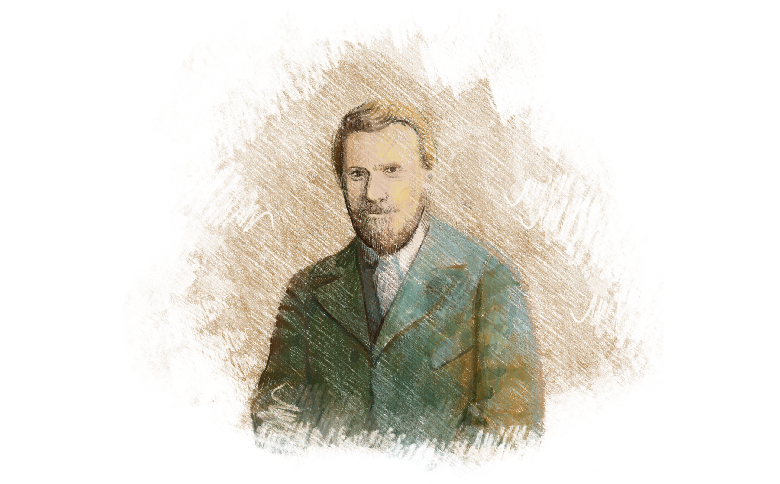
(1865 - 1911)
Great master of psychological portraiture of Russian modernism. Serov, who painted in the period of a transition between the art epochs, when artists were searching for new forms of self-expression, managed not only to learn from the legacy of his predecessors but also to work in his own style and favorite genre. In his paintings, portraits are always accompanied by landscapes.
Valentin, the son of a composer and a pianist, was born in 1865. His father died, and his mother went to Munich. The six-year-old boy left with his mother’s sister in a small village in the Smolensk Governorate where he demonstrated his painting skills for the first time. Valentin’s teacher was Ilya Repin. Serov entered the Saint Petersburg Academy of Arts, but he quit, wishing to work in his own style.
The artist considered it important to paint joyful and light subjects to stand out among numerous "heavy" paintings
Serov painted numerous portraits of famous people, including artists, for example, Ilya Repin. The portraitist depicted the composer Nikolai Rimsky-Korsakov. The artist also painted a lot of portraits of the Tsar family members, including Nicholas II himself.
Valentin Serov will paint a portrait of the girl "By the Window," and this girl from the painting
Serov will become a member of the Academy of Arts and join the association "The World of Arts."
The master could paint a portrait for three months; however, this helped him capture facial features that portrayed the model’s character traits to life. The author considered that painting for a long time was not difficult, but preserving freshness for so many sittings was a true skill.
Once he refused to paint the portrait of Empress Alexandra Feodorovna when she gave the artist some advice on how to improve his painting.
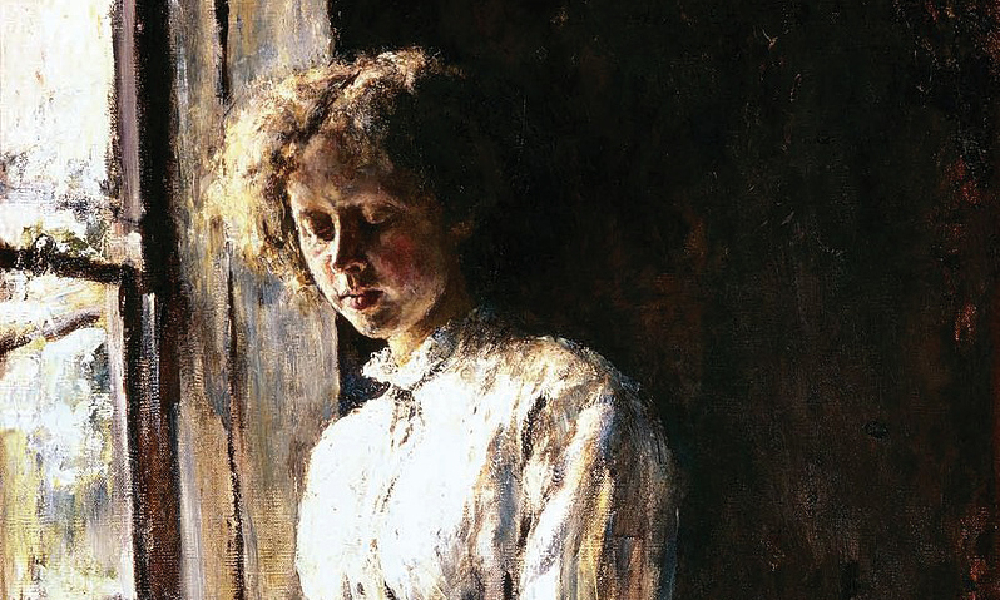
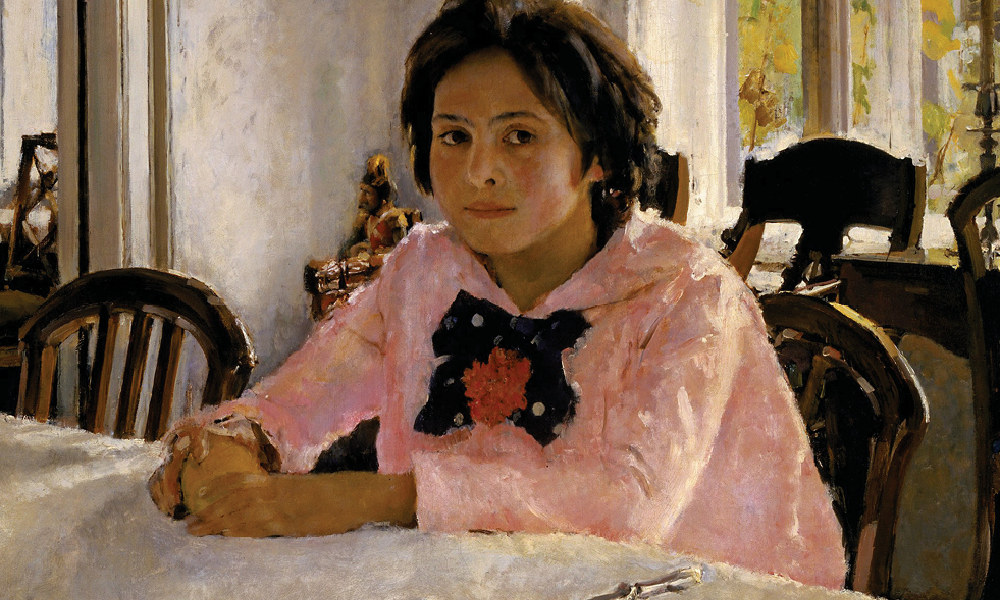
Serov loved staying in Abramtsevo. It is here that he created the portrait of Vera Mamontova, "Girl with Peaches." Valentin painted the members of the Emperor’s family, including Alexander III and Nicholas II. The portraitist also depicted the upper-class society representatives, such as Zinaida Yusupova, Maria Ermolova, and Ivan Morozov. He painted the artists Isaac Levitan, Konstantin Korovin, the writer Maxim Gorky, the musician Feodor Shaliapin, and the actress Ida Rubinstein.
You can see the paintings by Valentin Serov at online museums without leaving home:
Virtual Russian Museum
clck.ru/3S72bq
Valentin Serov Foundation
https://fondserova.ru/
The article has been prepared using the information from open sources.